
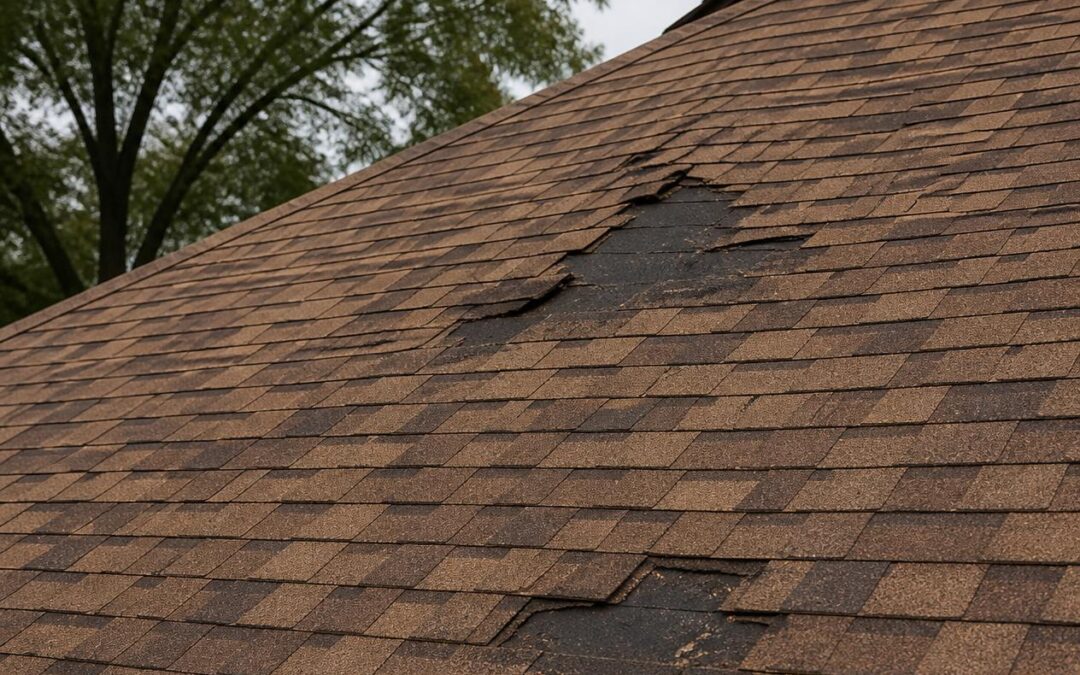
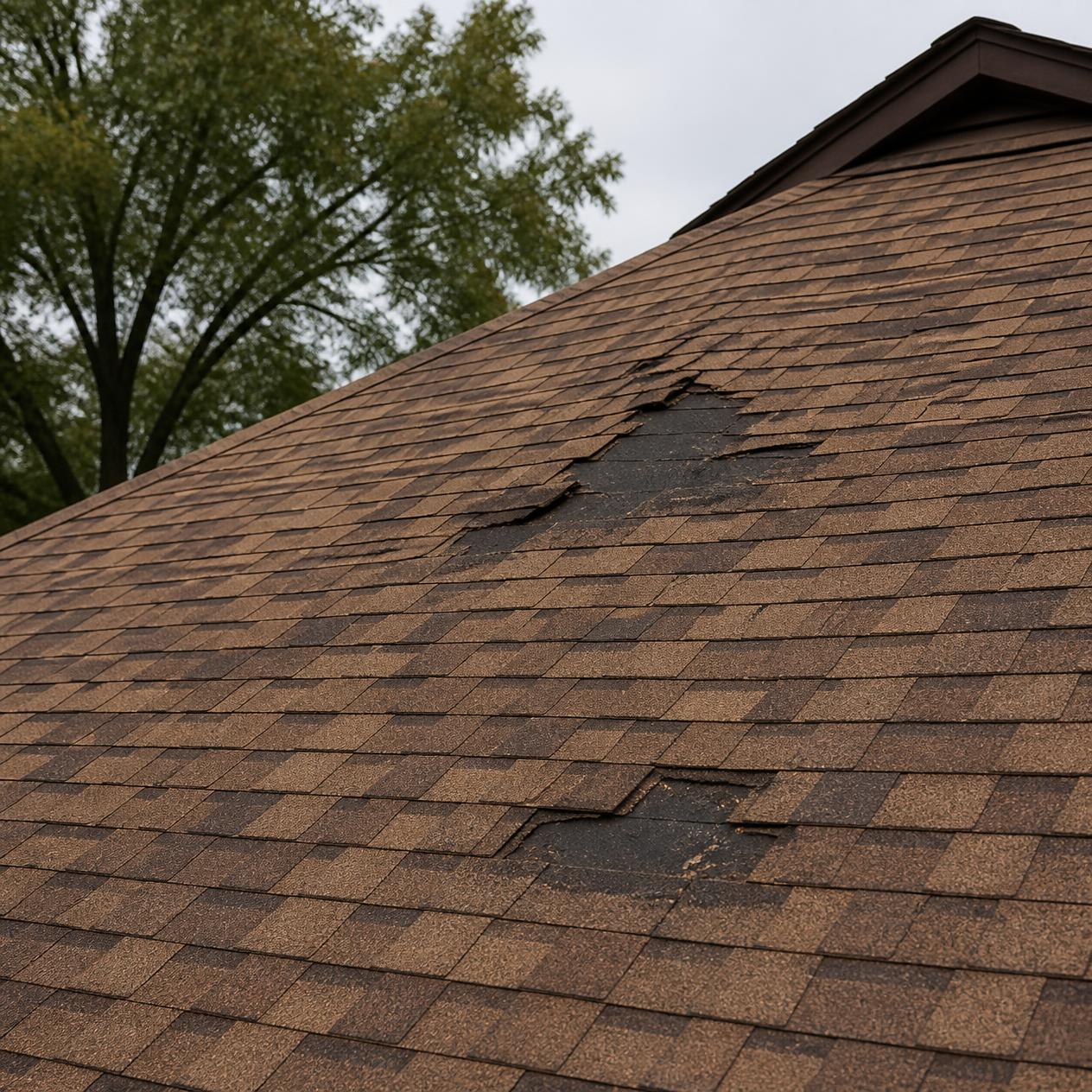
Strong winds can do more damage to a residential roof than many homeowners realize.
After a major storm, it is easy to look at your roof from the driveway, see that most of the shingles are still in place, and assume everything is fine. But wind damage is not always obvious. Shingles can loosen, lift, crease, or lose their seal without completely blowing off the roof.
For homeowners, identifying wind damage early can help prevent leaks, damaged insulation, interior water damage, and more expensive repairs later.
Understanding what to look for — and knowing when to call a professional — can make a big difference in protecting your home.
How Does Wind Damage a Residential Roof?
Wind puts pressure on your roofing system from several directions.
As wind moves across the roof, it can create uplift along roof edges, corners, ridges, valleys, and other vulnerable areas. If shingles or roofing components are already aging, loose, or damaged, strong gusts can make the problem worse.
Wind damage may include:
- Missing shingles
- Lifted or loose shingles
- Creased shingles
- Torn roofing materials
- Damaged flashing
- Loose ridge caps
- Exposed underlayment
- Damage around vents, chimneys, and other penetrations
- Punctures caused by wind-blown debris
- Damage to gutters, fascia, or other roof-edge components
Severe winds can sometimes remove large sections of shingles, but smaller areas of damage can be just as important to address.
A shingle that has lifted and resealed may still be damaged. Flashing may loosen without falling off. A small opening around a vent or roof penetration may allow water to enter during the next rain.
That is why homeowners should not rely only on what they can see from the ground.
Common Signs of Wind Damage on a Residential Roof
After a period of strong winds or severe weather, there are several warning signs homeowners can look for.
1. Missing Shingles
Missing shingles are one of the most obvious signs of wind damage.
You may notice a bare area on the roof or find shingles in your yard after a storm.
Once a shingle is missing, the roofing materials beneath it are more exposed to rain and additional weather.
2. Lifted or Loose Shingles
Shingles do not have to completely blow off your roof to be damaged.
Strong wind can lift the edge of a shingle and weaken or break its seal. The shingle may settle back into place afterward, making the damage difficult to see from the ground.
Loose shingles are vulnerable during future storms and may allow water underneath the roofing system.
3. Creased or Torn Shingles
When wind lifts a shingle but does not remove it entirely, the material can bend or crease.
A crease may weaken the shingle and make it more likely to fail in the future.
These areas often require a closer inspection because they may not be noticeable unless someone is properly evaluating the roof.
4. Damaged Ridge Caps
The ridge is the highest point of many residential roofs and can be particularly exposed to strong winds.
Damaged, loose, or missing ridge cap shingles can create vulnerable areas where water may enter the roofing system.
5. Damaged Flashing
Flashing helps protect areas where the roof meets walls, chimneys, vents, and other transitions.
High winds can loosen, bend, or pull flashing away from the surfaces it is designed to protect.
Because flashing is located around some of the most vulnerable areas of a roof, damage should be addressed promptly.
6. Debris Damage
Branches and other wind-blown debris can strike the roof during a storm.
Even if a branch does not create a large visible hole, it may crack shingles, damage flashing, puncture roofing materials, or affect gutters and other components.
7. Granules in Gutters or Downspouts
Asphalt shingles are covered with protective granules.
Some granule loss is normal as a roof ages, but a noticeable increase after a storm may indicate that shingles have been damaged by severe weather or debris.
Excessive granule loss can affect the long-term performance of the shingles.
8. Interior Water Stains
Sometimes the first noticeable sign of roof damage appears inside the home.
Watch for:
- Ceiling stains
- Water spots
- Damp drywall
- Peeling paint
- Moisture in the attic
- Wet insulation
- Unexplained musty odors
Keep in mind that the place where water appears inside your home may not be directly below the damaged area of the roof.
Water can travel along roof decking, rafters, insulation, and other building components before becoming visible.
Why Small Wind Damage Can Become a Bigger Problem
One of the biggest mistakes homeowners can make after a storm is assuming that a roof is undamaged simply because it is not leaking.
Roof damage can exist before water becomes visible inside the home.
A lifted shingle, loose piece of flashing, or small puncture may allow limited amounts of moisture into the roofing system. Over time, repeated rain and additional wind can make the problem worse.
Moisture that enters the roof can potentially affect:
- Roof decking
- Insulation
- Drywall
- Ceilings
- Walls
- Interior finishes
A small repair identified early may therefore prevent a much larger problem later.
What Should You Do After Strong Winds?
The first step is to stay safe.
Homeowners should avoid climbing onto a roof after a storm. Roofing surfaces can be slippery, damaged materials may be unstable, and problems may not be visible until you are already standing near them.
Instead, inspect what you can safely see from the ground.
Look for:
- Missing shingles
- Shingles or roofing materials in the yard
- Fallen tree limbs
- Damaged gutters
- Loose fascia
- Visible flashing damage
- Debris on the roof
You can also check the attic and interior of the home for signs of water intrusion.
If you notice damage — or if your home experienced particularly strong winds — consider having the roof professionally inspected.
How Commonwealth Roofing Corporation Can Identify Wind Damage
Commonwealth Roofing Corporation has served customers since 1981.
Our roofing professionals can inspect your residential roof following strong winds or severe weather and look for damage that may not be obvious from the ground.
An inspection may include evaluating areas such as:
- Shingles
- Ridge caps
- Roof edges
- Flashing
- Valleys
- Chimneys
- Vents and other penetrations
- Gutters and drainage areas
- Previous repair locations
- Areas affected by falling or wind-blown debris
The purpose of the inspection is to determine the condition of the roofing system and identify areas that may require attention.
Not every windstorm means your roof needs to be replaced.
When damage is limited and the roofing system is otherwise in good condition, targeted repairs may be appropriate.
The key is understanding the actual condition of your roof before making that decision.
Repairing Wind Damage Before It Gets Worse
When wind damage is found, addressing it promptly can help reduce the risk of additional problems.
Depending on the type and extent of damage, repairs may involve replacing damaged shingles, correcting flashing problems, repairing vulnerable roof details, or addressing areas affected by debris.
Every roof and every storm are different.
A professional evaluation can help determine whether the appropriate solution is a repair or whether more extensive work should be considered.
What homeowners should avoid is leaving known damage exposed to additional storms.
A small weakness in the roofing system today can become a much larger problem after another round of heavy wind and rain.
Can Proactive Roof Maintenance Help Prevent Wind Damage?
You cannot prevent high winds, but you can improve your roof's ability to handle severe weather.
Regular roof inspections and proactive maintenance can help identify developing problems before a storm exposes them.
A roofing professional may find conditions such as:
- Loose shingles
- Aging sealants
- Damaged flashing
- Vulnerable roof edges
- Minor punctures
- Loose ridge caps
- Drainage problems
- Debris accumulation
- Deteriorated previous repairs
These issues may seem minor during normal weather.
When strong winds arrive, however, an already loose or vulnerable component is more likely to be damaged.
Correcting those problems beforehand can help reduce the chances of wind turning a small maintenance issue into a larger roof repair.
Do Not Wait for a Leak to Check Your Roof
For many homeowners, the first time they think about their roof is when water starts coming through the ceiling.
By that point, the roofing problem may have existed for some time.
Routine inspections give you an opportunity to understand the condition of your roof before an emergency happens.
They can also help you track how your roofing system is aging and give you time to plan for future repairs or replacement instead of being surprised by an unexpected problem.
Protect Your Louisville Home Before the Next Storm
Louisville homeowners cannot control when the next round of strong winds or severe weather will arrive.
You can, however, make sure your roof is ready for it.
If your home has recently experienced strong winds, or if you are unsure about the condition of your roof, Commonwealth Roofing Corporation can help.
Our team can inspect your residential roofing system, identify potential wind damage, recommend appropriate repairs, and help you take a proactive approach to protecting your home.
When it comes to wind damage, identifying a problem early can make all the difference.
Safety, Service, & Quality — every day since 1981.
Louisville: (502) 459-2216
Hebron: (859) 943-0012
Service: (888) 818-4842