
What Shingle Granules in Your Gutters Can Tell You
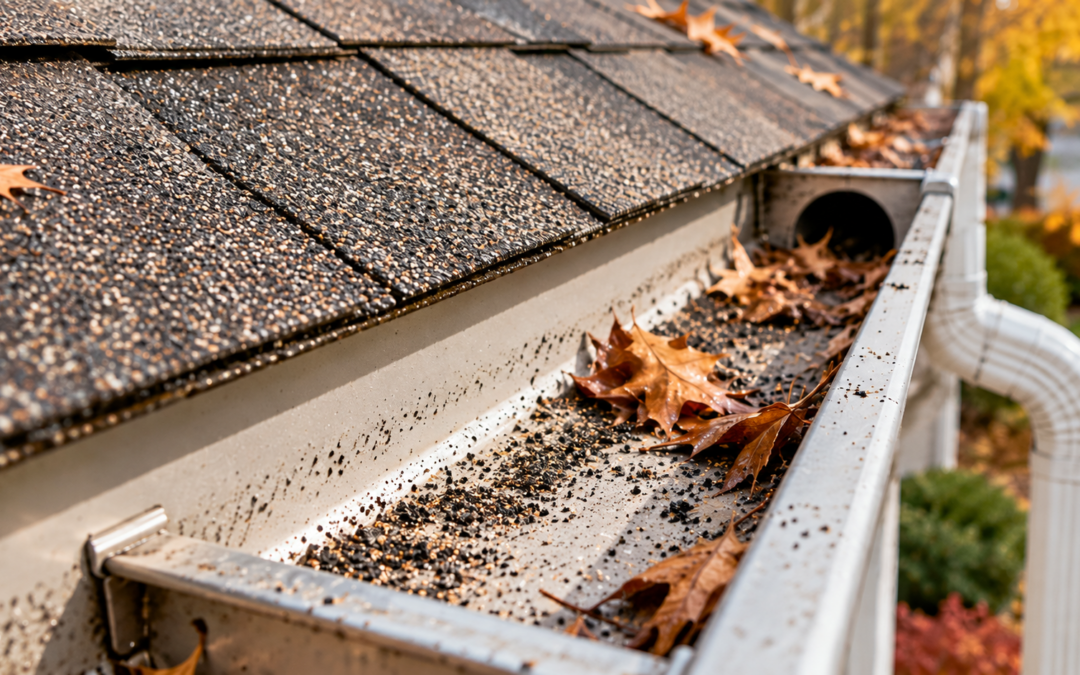
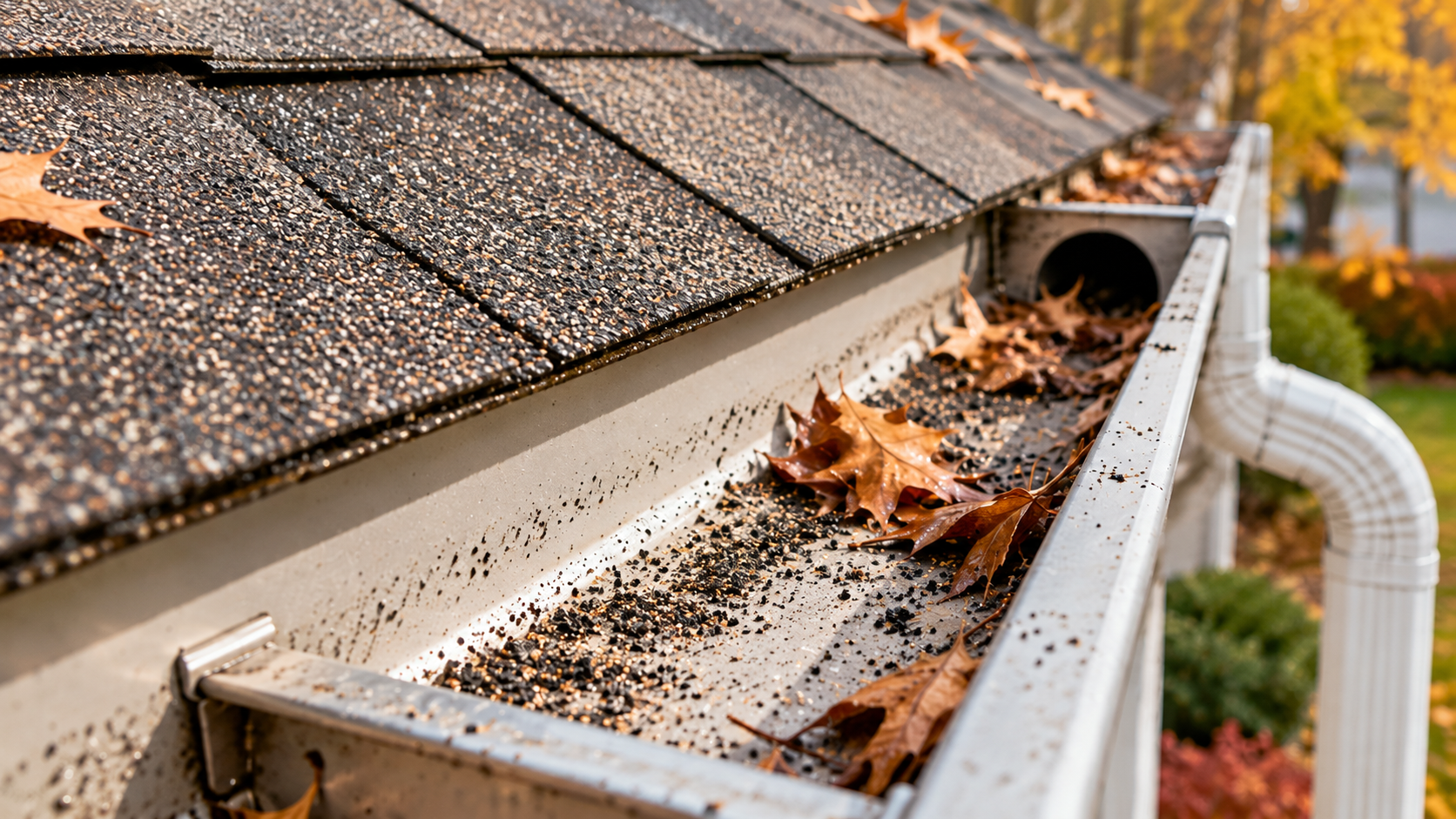
While cleaning your gutters this fall, you might notice something unusual.
Small, gritty particles collecting near your downspouts.
They look a little like coarse sand.
But they may actually be pieces of your roof.
Those particles are called shingle granules, and they play an important role in protecting your home.
Finding them does not automatically mean your roof is failing.
However, understanding why they are there can help you recognize when your shingles deserve a closer look.
1. What Are Shingle Granules?
Asphalt shingles are covered with small mineral granules.
They are not simply decorative.
Granules help:
- Protect asphalt from ultraviolet sunlight
- Shield the underlying roofing material from weathering
- Give shingles their color
- Provide a durable exterior surface
Without adequate granule coverage, the asphalt underneath becomes more exposed to sunlight and weather.
Over time, that can accelerate deterioration.
GAF identifies excessive granule loss as one possible sign of an aging or damaged roof. GAF
2. Some Granule Loss Is Normal
Here is something many homeowners do not realize:
Even a brand-new roof can shed granules.
During manufacturing, additional granules are applied to shingles.
Not all of them become permanently embedded.
Some loosen during transportation, installation and the first several months of weather exposure.
Those particles can eventually wash into gutters.
That means finding some granules after a new roof installation is not necessarily a reason for concern.
3. Older Shingles Lose Granules Too
Asphalt shingles do not last forever.
Years of exposure to sunlight, wind, rain and temperature changes gradually affect their protective surfaces.
As shingles age, granules may loosen.
That is part of normal weathering.
But there is an important difference between occasional granule loss and widespread deterioration.
A small amount of grit in the gutters may be relatively ordinary.
Large bare areas on the shingles deserve closer attention.
4. Look for Uneven Wear
Granule loss becomes more concerning when it appears concentrated in certain areas.
For example, you might notice:
- Dark patches on shingles
- Areas with noticeably different colors
- Sections that appear unusually smooth
- Visible asphalt where granules are missing
- Shingles that are cracking or curling
These conditions can indicate that the protective shingle surface has deteriorated.
GAF recommends watching for excessive granule loss alongside missing, cracked, curling or otherwise damaged shingles. GAF
The important thing is to evaluate the overall condition of the roof rather than relying on one symptom.
5. Storms Can Remove Granules
Fall is a useful time to look for granule loss because you may be evaluating the effects of summer thunderstorms.
Hail can damage shingles and dislodge their protective granules.
Strong winds and windblown debris can also affect roofing materials.
After a storm, homeowners may notice a sudden increase in granules around downspouts.
Other warning signs may include:
- Dented metal roof vents
- Damaged gutters
- Missing shingles
- Freshly exposed dark areas
- Visible impact marks
GAF notes that hail impacts can cause concentrated granule loss and damage beneath the shingle surface. GAF
Granules in your gutters do not prove storm damage.
But if their appearance coincides with a severe storm, a professional inspection may be worthwhile.
6. Watch Your Downspouts
You do not need to climb onto your roof to notice potential warning signs.
After a heavy fall rain, take a look around your downspouts.
You might see small piles of granules collecting where water exits.
If you notice this repeatedly, consider taking pictures.
Pay attention to:
How much is accumulating?
Is the amount increasing?
Did it begin after a storm?
Is the roof relatively new or considerably older?
Do the shingles show other signs of wear?
These observations can provide useful information during a professional roof inspection.
There is no universal amount of gutter granules that automatically means a roof needs replacement.
The condition of the shingles matters much more than the amount of grit alone.
7. Don't Make the Problem Worse
If you notice granule loss, avoid aggressive cleaning.
Pressure washing or scrubbing asphalt shingles can remove additional protective material.
Walking unnecessarily on the roof can also damage granules and create fall hazards.
GAF advises homeowners to inspect roofs from the ground and leave roof access to qualified professionals. GAF
If you notice something concerning, document it and schedule an inspection.
You do not need to climb onto the roof yourself.
8. What Happens When Granules Are Gone?
When significant portions of a shingle lose their protective granules, the underlying asphalt becomes more exposed.
That can contribute to:
Accelerated aging.
Sunlight and weather can affect the exposed asphalt more directly.
Brittle shingles.
Aging materials may become less flexible and more susceptible to cracking.
Surface deterioration.
Areas with extensive granule loss may continue to weaken.
Reduced service life.
Severely deteriorated shingles may need replacement sooner than expected.
Granule loss does not necessarily cause an immediate leak.
But extensive loss can indicate that the roofing material is no longer performing as intended.
Does Granule Loss Mean You Need a New Roof?
Not necessarily.
This is where professional evaluation becomes important.
If granule loss is minor and the roof is otherwise healthy, monitoring may be appropriate.
If the issue is limited to a small area, targeted repairs might be possible.
If granule loss is widespread and accompanied by cracking, curling or other deterioration, replacement may make more sense.
The goal should be to understand the roof's actual condition before making a major investment.
Why Fall Is a Good Time to Check
Autumn creates a useful opportunity to evaluate your shingles before winter.
Fall rain can carry loose granules into gutters and downspouts, making them easier to notice.
And if your roof is already showing significant wear, finding that out before snow, ice and winter winds arrive gives you more time to consider your options.
You do not need to assume the worst.
You simply need to pay attention to what your roof may be telling you.
Small Clues Matter
A handful of granules may mean very little.
An unusual amount combined with visible shingle deterioration may mean something more.
Knowing the difference can help homeowners avoid unnecessary worry while still recognizing problems that deserve attention.
At Commonwealth Roofing Corp., we believe an informed homeowner can make better roofing decisions.
Our goal is to help you understand what your roof actually needs.
Sometimes that means a small repair.
Sometimes it means routine monitoring and maintenance.
And when replacement is necessary, we believe homeowners deserve a clear explanation of why.
This fall, take a closer look at what is coming out of your gutters.
Your roof may be giving you valuable information.
Safety, Service, & Quality — every day since 1981.
Louisville: (502) 459-2216
Hebron: (859) 943-0012
Service: (888) 818-4842