
Most homeowners know to watch their shingles after a storm.
But some of the most vulnerable parts of a residential roof aren't the shingles themselves.
They're the places where something passes through them.
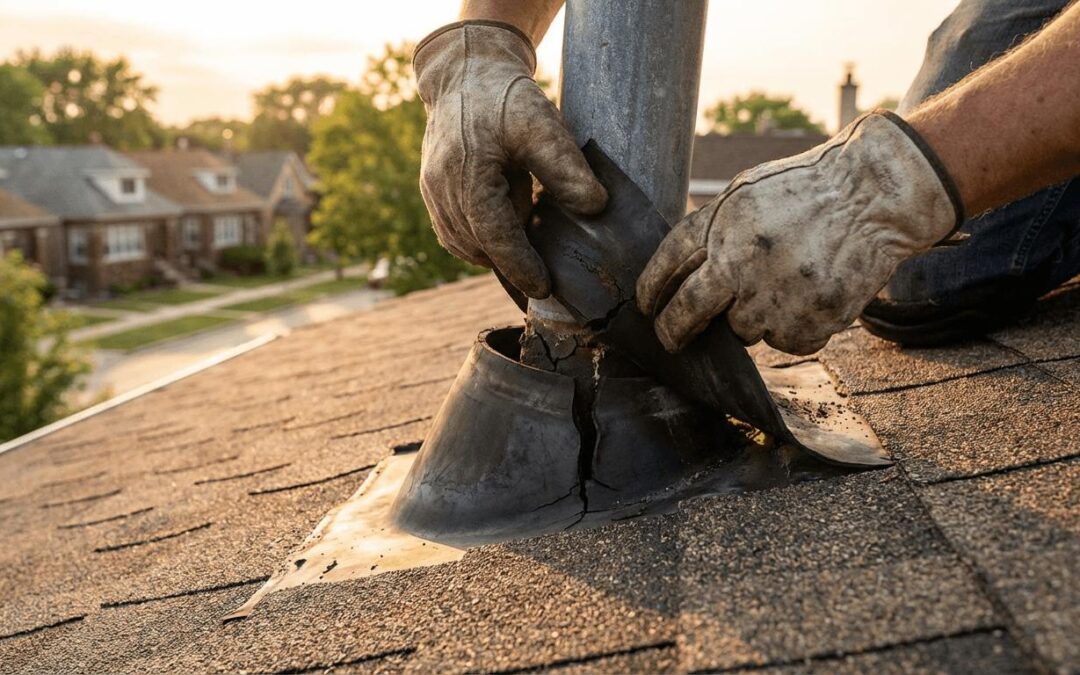
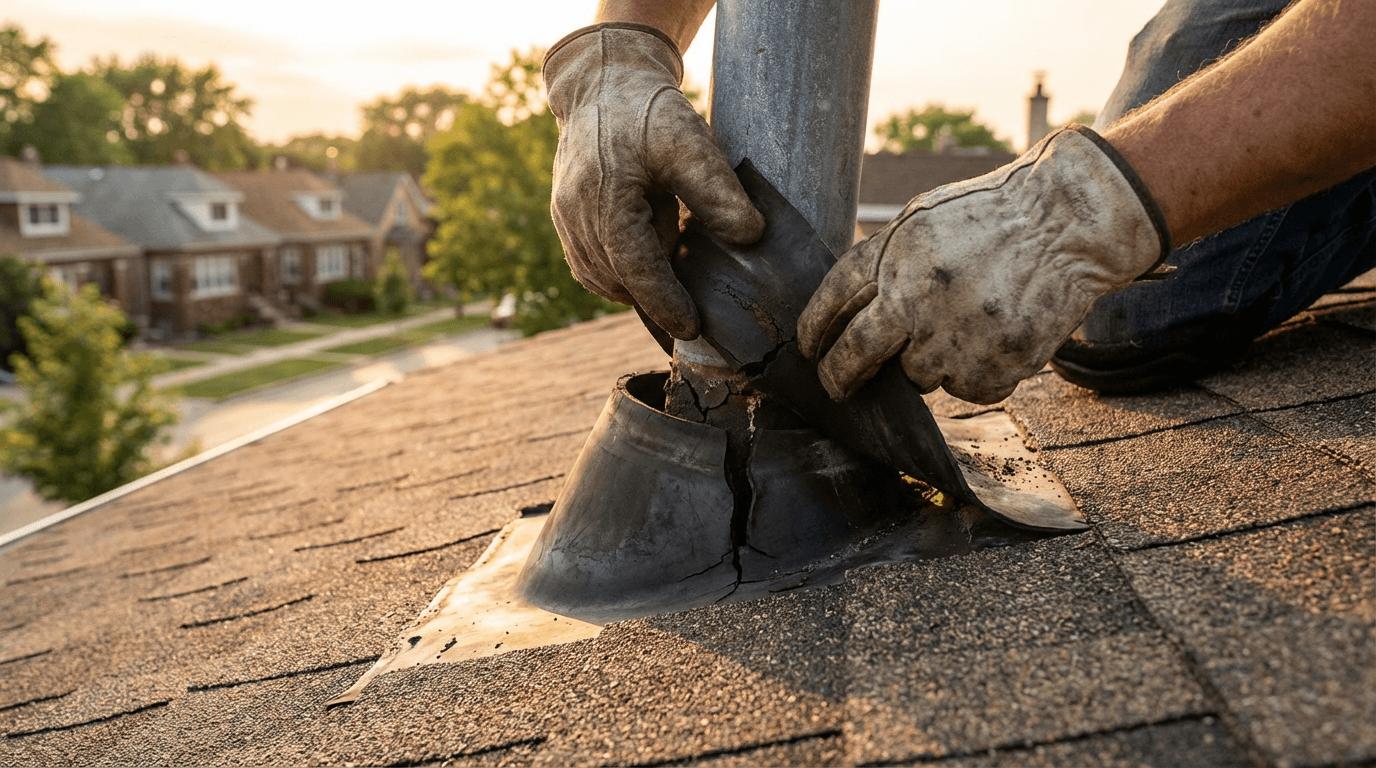
One of the most common examples is the plumbing vent pipe — and the small piece of flashing around it commonly called a pipe boot.
It may only cover a small portion of your roof, but when it begins to fail, water has a direct opportunity to reach the roofing system underneath.
What Does a Pipe Boot Do?
Plumbing vent pipes extend through your roof to help your home's plumbing system function properly.
Because that pipe creates a hole through the roofing system, it needs flashing around its base.
That flashing is designed to direct rainwater around the penetration and back onto the shingles.
A properly installed pipe boot helps maintain a watertight transition between the pipe and the roof.
GAF describes plumbing pipe penetrations as particularly vulnerable areas when flashing is missing, damaged or improperly installed.
Small Materials Face Big Weather
Pipe boots sit outside every day.
Sun.
Heat.
Cold.
Rain.
Wind.
Debris.
Some traditional designs contain rubber collars, seals or gaskets. Over time, exposed components can deteriorate, crack or become damaged by the elements. GAF specifically notes that vent-pipe flashings can degrade from weather exposure and that poorly protected joints may crack as temperatures change or after prolonged sun exposure.
Once an opening develops around the pipe, water may begin moving underneath the roofing system.
Caulk Is Not Always the Solution
When homeowners see a crack around a roof penetration, reaching for a tube of sealant may seem like an easy fix.
But pipe flashing is designed as a roofing detail — not simply a bead of caulk around a pipe.
GAF's steep-slope pipe-flashing guidance cautions that improper sealant use can create additional problems, including trapping water beneath shingles or damaging certain rubber and plastic components.
The better approach is to determine why the detail failed.
Look Inside Too
A damaged pipe boot may eventually create signs inside the house.
Watch for:
- Water staining on ceilings
- Moisture in the attic
- Damp roof decking around plumbing penetrations
- Staining around the vent pipe
- Evidence of repeated leakage after rain
Remember that water can travel along decking and framing before becoming visible.
The stain you see inside may not be directly below the point where water entered.
Fall Is a Good Time to Look
Pipe boots are easy to ignore because they're usually difficult to see from the ground.
But fall is a good time to include them in a professional roof inspection.
Your roofer can look for:
Cracked or deteriorated collars.
Loose flashing.
Damaged shingles surrounding the pipe.
Open edges.
Improper previous repairs.
Movement around the penetration.
Finding one small problem now is much easier than trying to diagnose a leak during cold winter weather.
Repair the Detail — Not Just the Symptom
Not every leaking pipe boot means the entire roof needs replacement.
In many cases, the surrounding roof may still be performing well.
A professional roofer can determine whether the boot or flashing detail can be repaired or replaced independently.
That's an important distinction.
Roof maintenance should be about solving the actual problem — not automatically recommending the largest possible project.
Don't Climb Up to Check It Yourself
Pipe boots may look easy to inspect.
Getting to them isn't.
Steep roof slopes, loose granules, wet shingles and changing fall weather can create serious fall hazards.
Homeowners can watch for interior warning signs and visually inspect the roof from the ground, but detailed roof work should be left to trained professionals with proper safety equipment.
Pay Attention to the Small Details
The largest part of your roof usually isn't where leaks begin.
It's often the small transitions.
Pipes.
Vents.
Chimneys.
Valleys.
Flashings.
Those details don't cover much square footage, but they do some of the most important work on your roofing system.
At Commonwealth Roofing Corp., we believe those details deserve the same attention as the rest of your roof.
Because finding one deteriorated pipe boot today may help prevent a much larger repair tomorrow.
Safety, Service, & Quality — every day since 1981.
Louisville: (502) 459-2216
Hebron: (859) 943-0012
Service: (888) 818-4842