
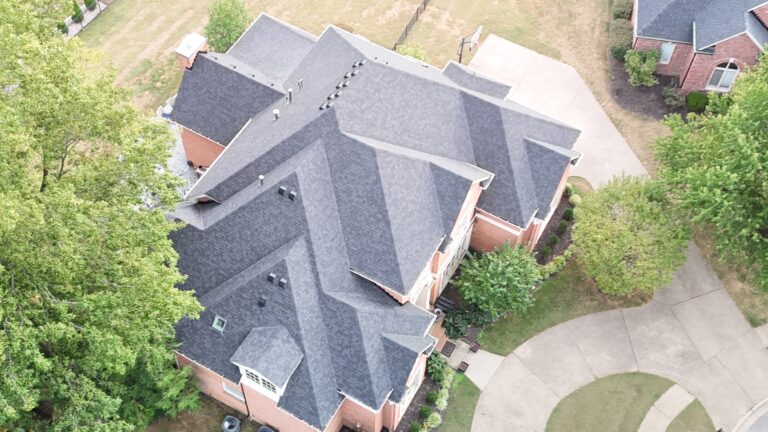
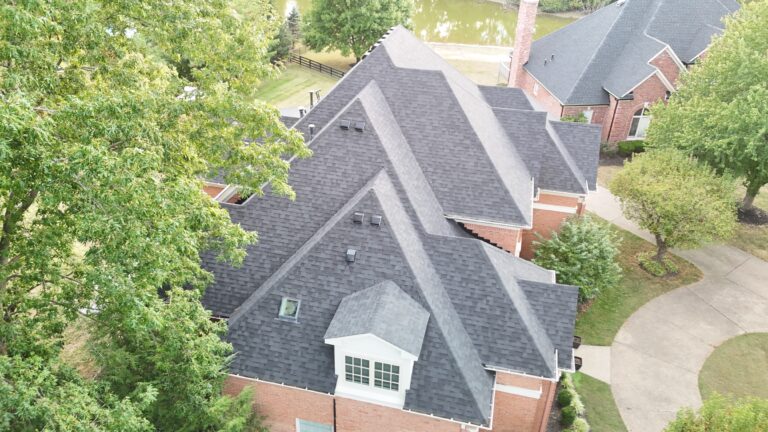
When homeowners compare roofing proposals, most of the attention goes to the obvious things: shingles, color, warranty, price and how quickly the contractor can get started.
But some of the most important parts of a roofing system are the details you may never see from the ground.
A roof can use high-quality shingles and still develop premature leaks, excessive heat buildup, moisture problems or shortened service life if the smaller installation details are handled incorrectly.
In many cases, the difference between a roof that simply looks good and one that performs well for decades comes down to details that are easy to overlook.
Here are eight of the most important.
1. Air Sealing the Attic Before Adding More Insulation
Homeowners often hear that they need more attic insulation to improve energy efficiency.
That may be true. But insulation alone does not stop warm, conditioned air from escaping through gaps in the ceiling below the attic.
Air can leak around:
- Plumbing and electrical penetrations
- Recessed lights
- Attic access doors
- Bathroom exhaust fans
- Wiring holes
- Framing gaps
- HVAC penetrations
During winter, warm indoor air carries moisture into the attic. When that warm, humid air reaches colder roof decking, condensation can develop.
Over time, that moisture can contribute to mold, deteriorated roof decking and reduced insulation performance.
During summer, uncontrolled air leakage can also make it harder for your HVAC system to maintain comfortable indoor temperatures.
The detail that matters: Before assuming more insulation will solve an attic efficiency problem, look for unwanted air movement between the living space and attic.
Insulation slows heat transfer. Air sealing helps stop air movement. A high-performing attic often needs both.
2. Getting Attic Ventilation Balanced — Not Just Adding More Vents
Ventilation is one of the most misunderstood parts of a residential roofing system.
A common assumption is simple:
More vents must mean better ventilation.
Not necessarily.
A properly designed attic ventilation system needs both intake and exhaust.
Typically, cooler outside air enters through soffit or other low-mounted intake vents. As attic air warms, it exits through ridge vents or other exhaust vents near the top of the roof.
If there is plenty of exhaust but inadequate intake, the ventilation system may not work as intended.
Blocked soffit vents are another common problem. Insulation can cover intake openings, preventing air from moving through the attic even though the roof appears to have adequate ventilation from the outside.
Poor ventilation can contribute to:
- Excessive attic temperatures
- Higher cooling loads
- Moisture accumulation
- Condensation
- Premature deterioration of roof components
The detail that matters: Ventilation should be treated as a complete airflow system, not as a collection of individual vents.
3. Inspecting the Roof Deck Instead of Simply Roofing Over It
Shingles are only the outermost layer of the roof.
Underneath them is the roof deck, and the condition of that deck has a major influence on how well the finished roof performs.
During a roof replacement, removing the old roofing exposes an important opportunity to inspect the decking for problems such as:
- Soft or deteriorated wood
- Water damage
- Delamination
- Excessive gaps
- Uneven surfaces
- Improper previous repairs
- Areas weakened around penetrations or flashing
Installing new shingles over compromised decking does not eliminate the underlying problem.
The roof may look completely new from the street while damaged material remains underneath.
Deck condition also affects how securely fasteners hold the roofing system.
The detail that matters: A roof replacement should include a meaningful inspection of the substrate before the new roofing system covers it again.
Once the new roof is installed, correcting decking problems becomes considerably more difficult.
4. Fastener Placement and Depth
Roofing nails are tiny compared with the entire roof.
Their importance is not.
Manufacturers specify where shingles should be fastened, how many fasteners should be used and how those fasteners should be driven.
A nail driven too deeply can cut into or damage the shingle.
A nail left too high may prevent the shingles above it from lying properly.
A fastener placed outside the intended fastening area can reduce the shingle's ability to resist wind.
And inconsistent fastening across thousands of shingles can turn what appears to be a small workmanship issue into a much larger performance problem.
This is especially important because homeowners typically cannot inspect fastening once the roof is completed.
The detail that matters: Correct fastener placement, quantity and depth should be treated as a critical installation requirement, not a minor production detail.
5. Flashing at Walls, Chimneys and Roof Transitions
Many roof leaks do not begin in the middle of an open field of shingles.
They begin where the roof meets something else.
That includes areas around:
- Chimneys
- Sidewalls
- Dormers
- Skylights
- Plumbing vents
- Roof-to-wall transitions
- Other penetrations
These areas rely on carefully designed flashing to direct water back onto the surface of the roof.
One of the biggest mistakes is relying too heavily on caulk or roofing cement.
Sealants can be useful components of a roofing detail, but they generally should not substitute for properly installed flashing.
Why?
Because sealants age. They expand and contract. They can crack, separate and deteriorate from UV exposure.
Proper flashing uses overlapping materials and gravity to manage water rather than depending entirely on a bead of sealant to remain watertight indefinitely.
The detail that matters: Ask how flashing will be handled — particularly existing flashing around chimneys and walls.
Those details may determine whether a roof remains watertight long after the shingles themselves still look perfectly good.
6. The Roof Edges: Starter Shingles, Drip Edge and Underlayment
Roof edges take a significant amount of abuse.
Wind pushes against them. Water drains across them. Gutters attach nearby. And because the edges are exposed, small installation errors can become significant over time.
Three components deserve particular attention.
Starter shingles
Starter shingles help seal the first course of shingles and improve wind resistance along vulnerable roof edges.
Drip edge
Metal drip edge helps direct water away from the roof deck and fascia.
Underlayment
Underlayment provides an additional layer of protection beneath the finished roofing material.
What matters is not simply whether these materials are present. The materials must overlap and integrate correctly so water continuously moves toward the exterior of the roofing system.
Think of it like overlapping fish scales.
Each layer should direct water onto the layer below it.
The detail that matters: Edge protection is a system. Starter material, underlayment, flashing and drip edge need to work together.
7. Valleys and Other High-Water-Flow Areas
A roof valley is where two roof slopes meet.
That geometry naturally concentrates water.
During a heavy rainstorm, a valley may carry significantly more water than an ordinary section of roof because runoff from two slopes is being directed into the same channel.
That makes valleys particularly sensitive to:
- Underlayment installation
- Shingle placement
- Fastener location
- Debris accumulation
- Flashing methods
- Proper water flow
Complex roofs may also have areas where an upper roof dumps water onto a lower roof.
These locations deserve additional attention because concentrated runoff can accelerate wear.
A tiny weakness in an ordinary section of roof might remain unnoticed for years. Put that same weakness in an area handling concentrated water, and the consequences can appear much sooner.
The detail that matters: Roofing details should account for how water actually travels across the roof, not simply how the roof looks on a drawing.
8. Where the Water Goes After It Leaves the Shingles
A roofing system's job does not end at the edge of the roof.
Water still needs somewhere to go.
Gutters and downspouts that are undersized, clogged, improperly pitched or poorly located can allow water to back up or overflow around:
- Fascia boards
- Soffits
- Exterior walls
- Windows
- Foundations
- Landscaping
Roof geometry matters, too.
A large upper roof draining directly onto a small lower roof section may create unusually heavy water flow in one location.
Downspouts from an upper roof that discharge directly onto lower shingles can also concentrate water and wear.
The shingles may technically be performing correctly while the overall drainage system is creating unnecessary stress on the building.
The detail that matters: A good roofing evaluation follows the water all the way from the ridge to its final drainage point.
The Best Roof Is a Complete System
It is easy to focus on the shingle because that is the part of the roof everyone can see.
But a residential roof is really a system made up of decking, underlayment, flashing, fasteners, ventilation, edge protection, drainage and the finished roofing material.
Every component affects the others.
That is why two roofs using the exact same shingle can perform very differently over time.
When comparing roofing contractors, homeowners should look beyond questions such as:
“What shingle do you install?”
Ask questions like:
How will you evaluate my attic ventilation?
What happens if damaged decking is discovered?
How will existing chimney and wall flashing be handled?
What protects the roof valleys and edges?
How will you make sure intake vents aren't blocked?
Where is concentrated roof runoff going?
The answers can tell you much more about the quality of the finished roof than the brand name printed on the shingle package.
A well-built roof isn't defined by one premium product. It is the result of dozens of small details being handled correctly.
And those are often the details that determine whether your roof merely survives — or performs efficiently and protects your home for years to come.
Have questions about the condition or performance of your roof?
Commonwealth Roofing Corporation can help you evaluate the entire roofing system — not just what is visible from the ground.
Safety, Service, & Quality — every day since 1981.
Louisville: (502) 459-2216
Hebron: (859) 943-0012
Service: (888) 818-4842